


For organizations deciding where to begin with physical AI, the two failure modes are clear. One is waiting for perfect maturity. The other is trying to transform everything at once. The better path is narrower: pick one high-friction workflow, set clear success metrics, and build a team around delivery. Robotics is impressive on its own, but the real goal is measurable improvement in your own environment.
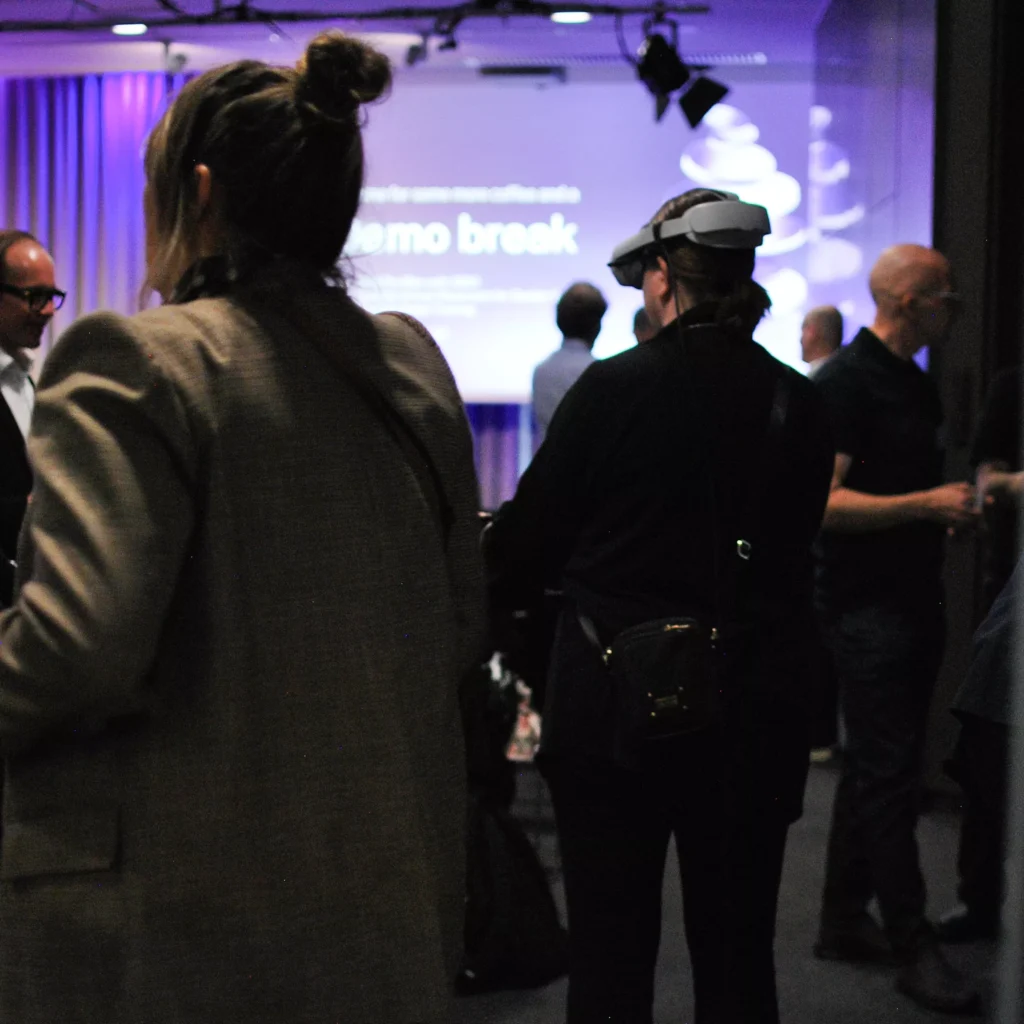
That was the lens I brought into the AI-Driven Robotics Session 2026 at Finlandia Hall, and the lens I left with sharpened. Here is what stood out across the morning, and what I think matters most for executives weighing where to place bets.
The imagination gap
A theme from the closing roundtable is that teams in physical AI may overthink or underthink solutions. Today's manufacturing robots are constrained specialists. Humanoids represent the long-term generalist vision, but they are not automatically the answer. Robotics is not limited by human form, and simpler specialized designs are often more robust in practice, while more complex hardware can solve certain tasks better.
That said, humanoids do have real advantages. Teleoperation, motion capture, and mimic learning are more straightforward, and most existing environments and tools were built for human use. The open question is whether adoption shifts gradually toward humanoids or tries to move there more aggressively. For executives, the practical implication is to resist anchoring on form factor before the workflow is clearly defined.
Demos are not deployments
Real-world impact depends less on isolated model performance and more on full-system execution. Strong demos are only the beginning. Integration, constraints, and measurable outcomes determine whether value holds in production. The Konecranes perspective on humanoid research and hardware choices reinforced this with concrete R&D examples, and this point still gets too little attention in strategy discussions about robotics.
A key takeaway from the day is this: a model that works in the lab and a model that works on your floor are different products. The gap between them is where many projects struggle.
Synthetic data is now infrastructure, not a curiosity
NVIDIA's platforms, Omniverse and Cosmos, are accelerating physical AI by enabling large-scale world simulation and faster training loops. This becomes especially important when moving from narrow robot tasks toward broader capabilities. Synthetic data and simulated environments are becoming core enablers, not extras.
This aligns with my experience. High-quality synthetic data improves robustness and scale when real edge cases are rare, expensive, or unsafe to capture. The caveat is that simulated success does not guarantee field success. Hidden bias and overfitting can still surface in production. Real-world validation data is still needed to keep models honest, even if better simulation can reduce how much of it is required.
Physical AI is also a workforce and policy question
The University of Turku's Frans Björkroth had a broader lens on the next two decades. Physical AI will affect labor markets, healthcare, services, safety, and geopolitical dependencies. Concretely, there will be labor substitution pressure in some manufacturing roles, while new roles emerge in integration, supervision, and maintenance.
Humanoids are not only a technology trend. They are a policy, workforce, and trust question. The net effect needs to be evaluated case by case and designed in from the start, not added after deployment.
Finland's window is open, but narrowing
The opening message of the day was direct. Finland should move early in physical AI rather than watch from the sidelines. I share that urgency. There is a real window for capable companies to build a meaningful position while the industry is still taking shape. Hardware and training tools are improving fast, but turning capability into dependable real-world behavior remains very challenging. That is where competitive advantage compounds.


Three takeaways for decision-makers
- Physical AI is moving into real use cases, but selectively. Do not generalize from a demo.
- Integration is harder than the demo. Budget and plan for full-system adoption, not just model quality.
- Societal implications must be designed in from the start. Do not add them later as afterthoughts.
About the author
Karri Haranko
Karri is a Senior Machine Learning Engineer at Younite with extensive experience across computer vision and 3D rendering. While his work spans a broad range of machine learning projects, his particular interests include AI-driven visual systems and performance-critical engineering.

Interested in Physical AI? Contact us: sales@younite.ai
