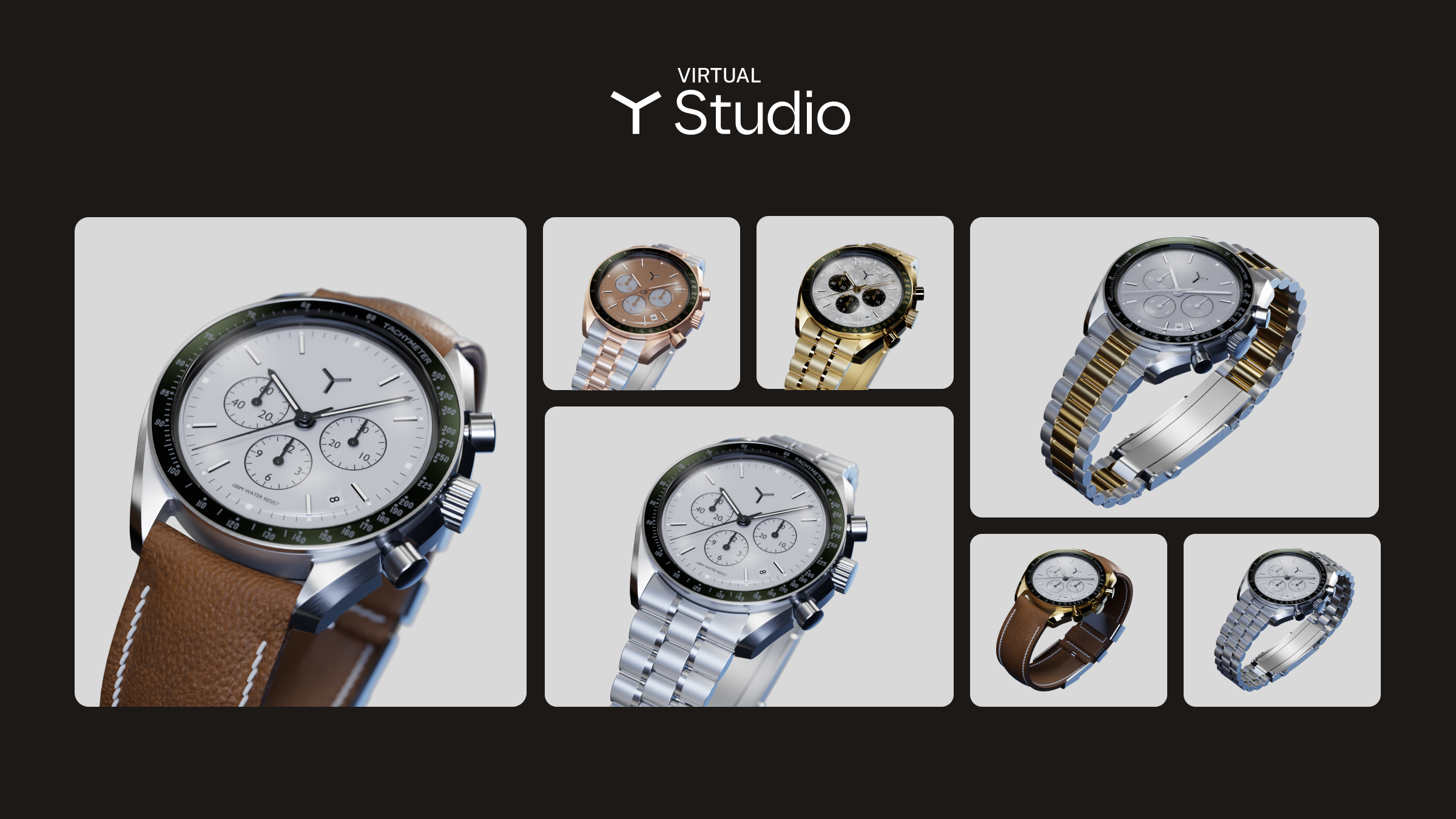
Every internal champion pushing for content automation of product visuals eventually hits the same question from finance or leadership: what does this actually buy us that we don't already have? In this context, by content automation, we mean generating product visuals directly from a digital twin and a set of configuration rules, rather than photographing or manually building every variant by hand.
Here are seven concrete answers, each based on what actually changes once Virtual Studio platform is adopted.
1. It makes production affordable at real catalog scale
At forty lines times thirty configurations, the catalog runs into the tens of thousands of distinct visuals once markets and channels are factored in. Shooting or physically rendering that volume, one setup per variant, would consume a marketing budget many times over before covering half the catalog. Automated visual assets generated from a shared source model bring that cost down to a fraction of the physical alternative, which is the number finance actually wants to see.
2. It makes production possible, not just faster
Consider a manufacturer of industrial access equipment, purely as illustration: roughly forty product lines, each with about thirty configuration options. Some of those configurations exist only as engineering models, not yet built as physical units. Traditional product photography automation can't shoot a product that hasn't been manufactured. A digital-twin-based platform can render it accurately before the first physical unit exists, which means marketing and sales can go to market the same day a configuration is approved, not months later once a unit is finally built and shipped to a studio.
3. It scales without adding headcount
The test for real scalability is simple: if the product line doubles, does the visual budget or team size have to double with it? With a properly built platform, it doesn't. Visual content generation scales with the catalog, not with the number of people producing it, which is the argument that holds up over a three-year horizon, not just a single campaign.
Traditional visual production used to require an entire team or an agency. Now, a single marketer or salesperson can produce 3D product images in minutes that are ready to use as is. As Russell Anderson, Marketing Director from ILOQ put it: "You don't need to be an IT wizard or a graphic artist or designer to be able to utilize it."
4. Brand consistency is enforced by the platform, not policed by a reviewer
“Do I dare let our sales use this or will it be off-brand?” Approved camera and lighting angles, plus configuration logic at render time means an off-brand image is impossible rather than caught in a review pass. For a global brand selling the same forty lines across multiple regions, that consistency exists automatically the first time, at every scale, without a growing review team to keep pace.
5. The platform gives centralized control
Before automation, tracking which of forty lines by thirty configurations have been photographed, in which market, for which channel, is typically an organizational problem spread across multiple vendors. A centralized platform manages combinations, variations, and output parameters in one place, so nothing falls through the cracks.
6. It becomes the source of truth for what's actually sold where
Not every market carries the same models or configurations. A platform that encodes market-specific product data does more than generate images, it tells field and sales teams which variants are relevant in which market, preventing the wrong configuration from being marketed or quoted in a region where it isn't even sold. That's a control benefit most teams don't budget for until they've been burned by the alternative.
7. It compounds speed into revenue
Complex product rendering that used to take weeks of shoot scheduling and agency turnaround can happen in the time it takes to configure a render job. That means campaigns, launches, and configurator updates go live when the business needs them to, not when a studio calendar allows. Over a year, that responsiveness is the difference between shipping content on schedule and always being a step behind the product roadmap.
Put together, these aren't seven separate features, they're seven ways the same investment shows up on both sides of the ledger: cost avoided and revenue protected. That's the version of this argument worth taking into the budget conversation.
What Younite Virtual Studio is
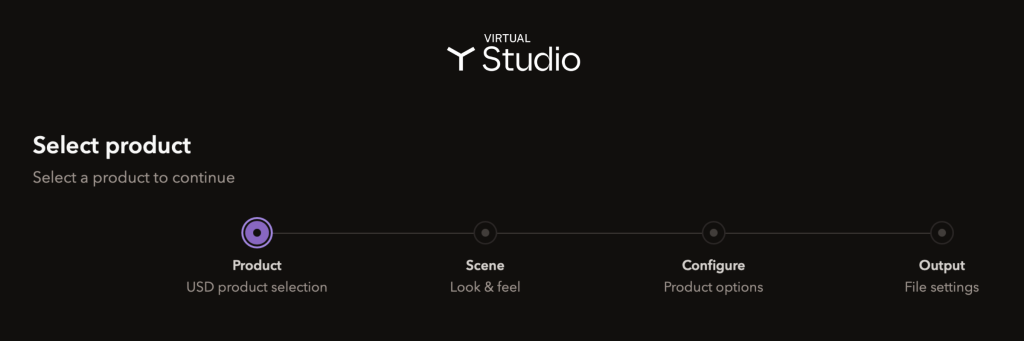
Virtual Studio is Younite's cloud-based platform for generating photorealistic product visuals from a digital twin, built on NVIDIA Omniverse, so brand-consistent, market-correct imagery can be produced and updated in minutes instead of weeks, without a photoshoot or an outside agency.
If your team is trying to make that same case internally, we're glad to walk through what it would look like for your catalog.
Let's Younite. Contact our us: sales@younite.ai
About the author
Alexandra Jokinen
Alexandra works at Younite developing Sales and Marketing operations. Her background spans international markets across Europe and Asia in branding, marketing, event production, and monetization. She is currently focused on bringing next-generation, digital-twin-based product visualization platforms to market.