
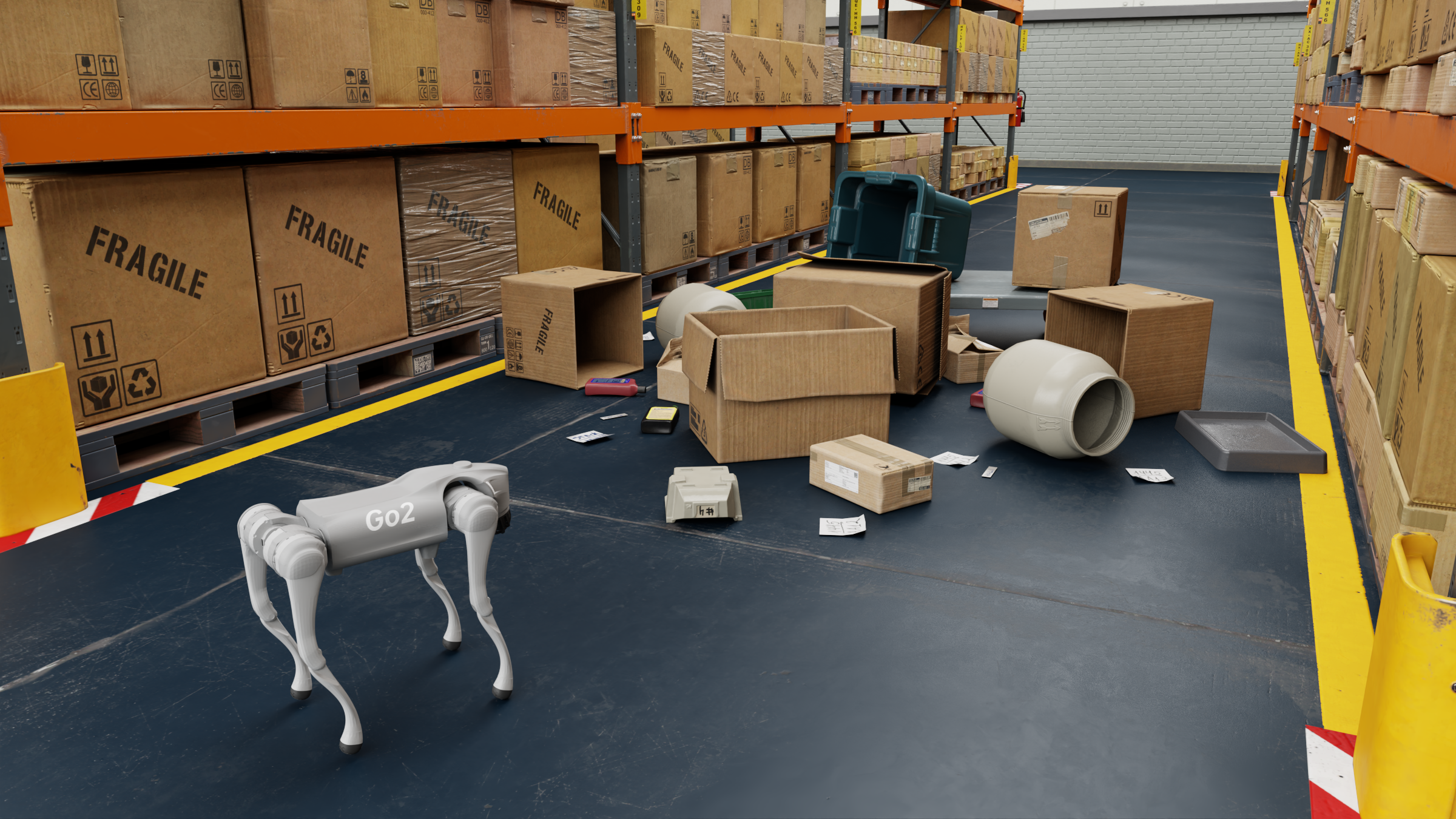
"Can the robot get through, or is there stuff on the floor again?"
It's a mundane question, but for any operation running automated guided vehicles, autonomous mobile robots, or forklifts on a schedule, it's the question that decides whether the day runs smoothly or grinds to a halt. A blocked aisle doesn't just slow one robot: it cascades into missed pickups, rerouted traffic, and manual intervention that eats the very efficiency automation was supposed to deliver.
Traditional camera monitoring can tell you that something is there. It can't tell you what to do about it. That gap, between seeing and understanding, is where most warehouse floors still lose time every day.
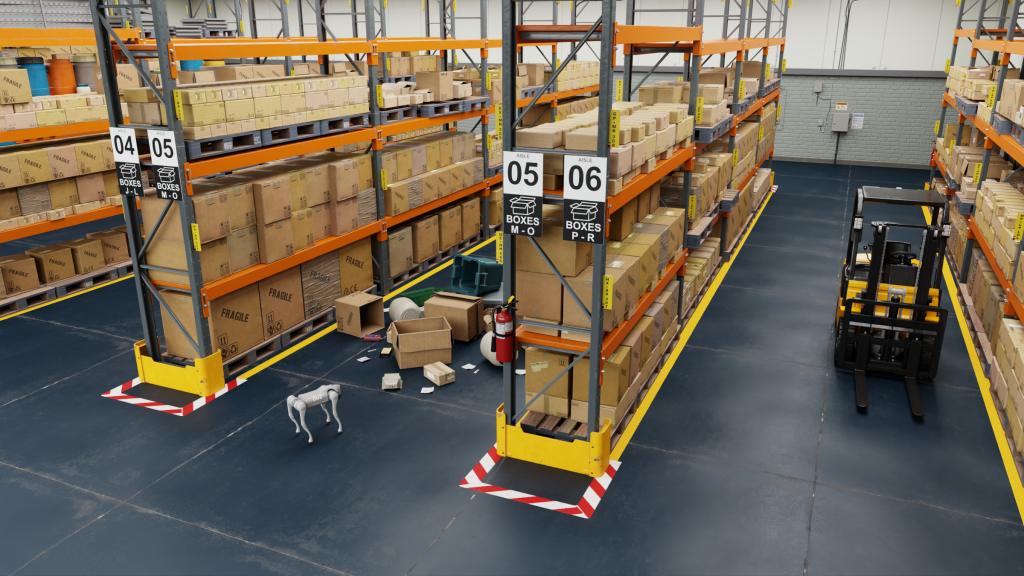
From Detection to Decision
Intelligent, secure camera monitoring changes what's possible here in two important ways.
First, it doesn't just detect, it understands and decides. Conventional computer vision can flag "there's an object in that spot." A smarter system goes further: "this aisle is blocked, clear it first, these two are fine." That's the difference between observation and decision, and the decision is what actually saves time.
Second, everything runs on site, on your own hardware, with no cloud dependency. Warehouse footage and operational data never leave the building. For many industries, that removes the question of where sensitive operational data ends up, and it eliminates the ongoing cost of cloud services that scale with camera count and data volume.
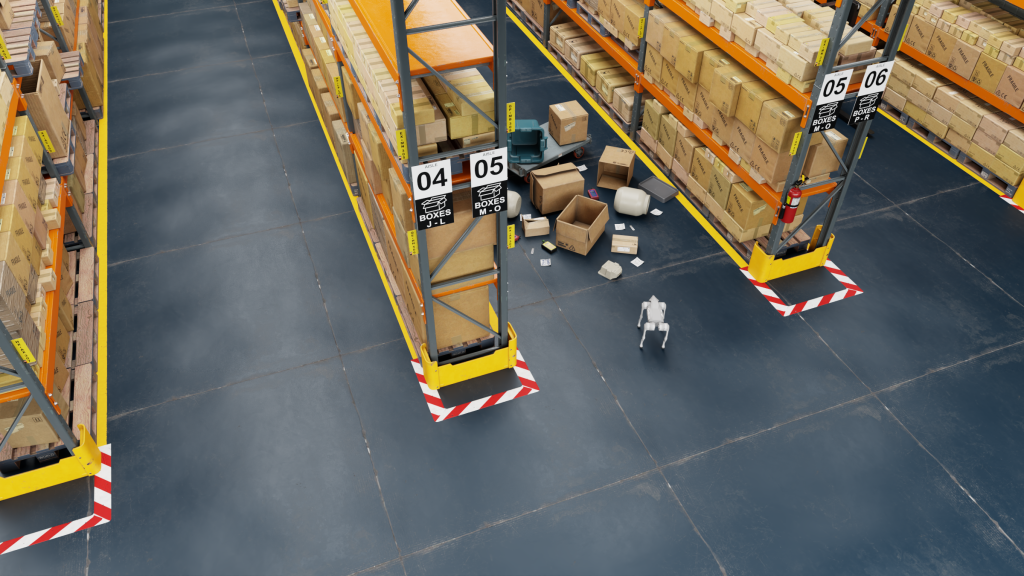
How It Works: Digital Twin Meets AI
What makes this possible is the combination of a digital twin and artificial intelligence. In the demo video below, the digital twin is actually generating the camera footage itself. There's no live warehouse connected yet, so it's standing in as both the data source and the simulated world, letting the system learn the right reasoning and decision-making before it ever touches a real site.
In production, that role changes. Once real cameras are feeding the system, the value of the twin increases. It keeps working in three ways:
1. as a continuous training ground, where rare or unusual situations can be generated and learned safely rather than staged as real accidents.
2. as a simulation sandbox, where the system can test a proposed action ("close this aisle, reroute traffic") and see the likely consequences before anything actually happens.
3. and as a unified situational picture, fusing every camera and sensor into one live view of the facility that can anticipate what's coming next, not just report what's already there.
That middle role is the one worth underlining: it's what makes an AI system safe to act on, not just useful to consult. Instead of a decision going straight from camera to action, the twin lets it be checked first: simulated, verified, then carried out. That's the difference between an AI that suggests and an AI you can actually trust to act. Worth being upfront about: this demo proves the perceiving, understanding, and deciding part. That closed loop, where the twin verifies a decision before it's carried out, is the direction the architecture is built toward, and it's tailored to each customer's specific site and use case.
Let's look a little closer at how this works in practice.
Younite AI builds digital twin foundations on the open OpenUSD standard, connecting sales, design, production, Physical AI robotics, and lifecycle services on a single model. If you'd like to talk about what a first step might look like for your organisation, get in touch.
