And the Answer May Lie Between Reality and Simulation.
Physical AI was one of the dominant conversations around Slush 2026. Intelligent machines, autonomous systems and AI that can interact with the physical world are moving rapidly from research into real applications. As NVIDIA's first Finnish AI and Omniverse partner, we have learned a lot from our customer projects.
One of the clearest lessons is that behind the excitement lies a fundamental challenge: where will all the training data come from?
The Physical World Is Not a Dataset
A modern industrial facility can contain thousands of machines, sensors, cameras and interconnected systems.
Every second, these environments generate enormous amounts of information capturing fragments of the physical world. Having this data doesn't guarantee a successful first Physical AI pilot, nor does it turn a proof of concept into a production-grade solution.
Information is scattered across different systems. Video footage lacks operational context. Sensor readings don't necessarily explain what is happening around them, and the relationships between physical objects, processes and events are rarely captured in a way AI can immediately understand.
Turning this information into structured, contextualized training data can require significant manual effort. Even then, the data only covers what has already happened.
How Do You Train AI for Situations That Haven't Happened?
Physical AI systems have to work in environments that never stand still. Machines break down, people don't always move the way you'd expect, and conditions can shift from one hour to the next. The scenarios that matter most are often the ones that are hardest to capture.
You can't simply wait for every possible equipment failure, safety incident or unusual operating condition to happen in the real world, and collecting millions more hours of video won't automatically fill the gaps either. Physical AI needs a way to learn from both the reality we can observe and the scenarios we have yet to experience.
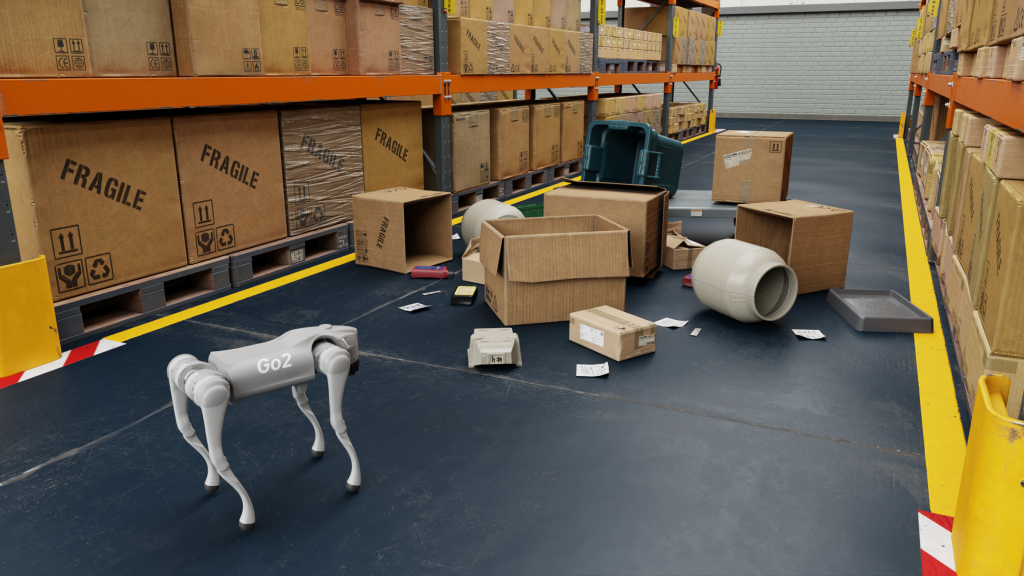
This is where simulation becomes essential. Synthetic data is artificially created training data, often generated in a virtual replica of a real environment instead of being recorded in the real world. Because it is created in simulation, it can cover situations that would be too rare, risky or expensive to capture otherwise.
From Reality to Simulation
At Younite AI, we believe operational digital twins can play an important role in addressing this challenge.
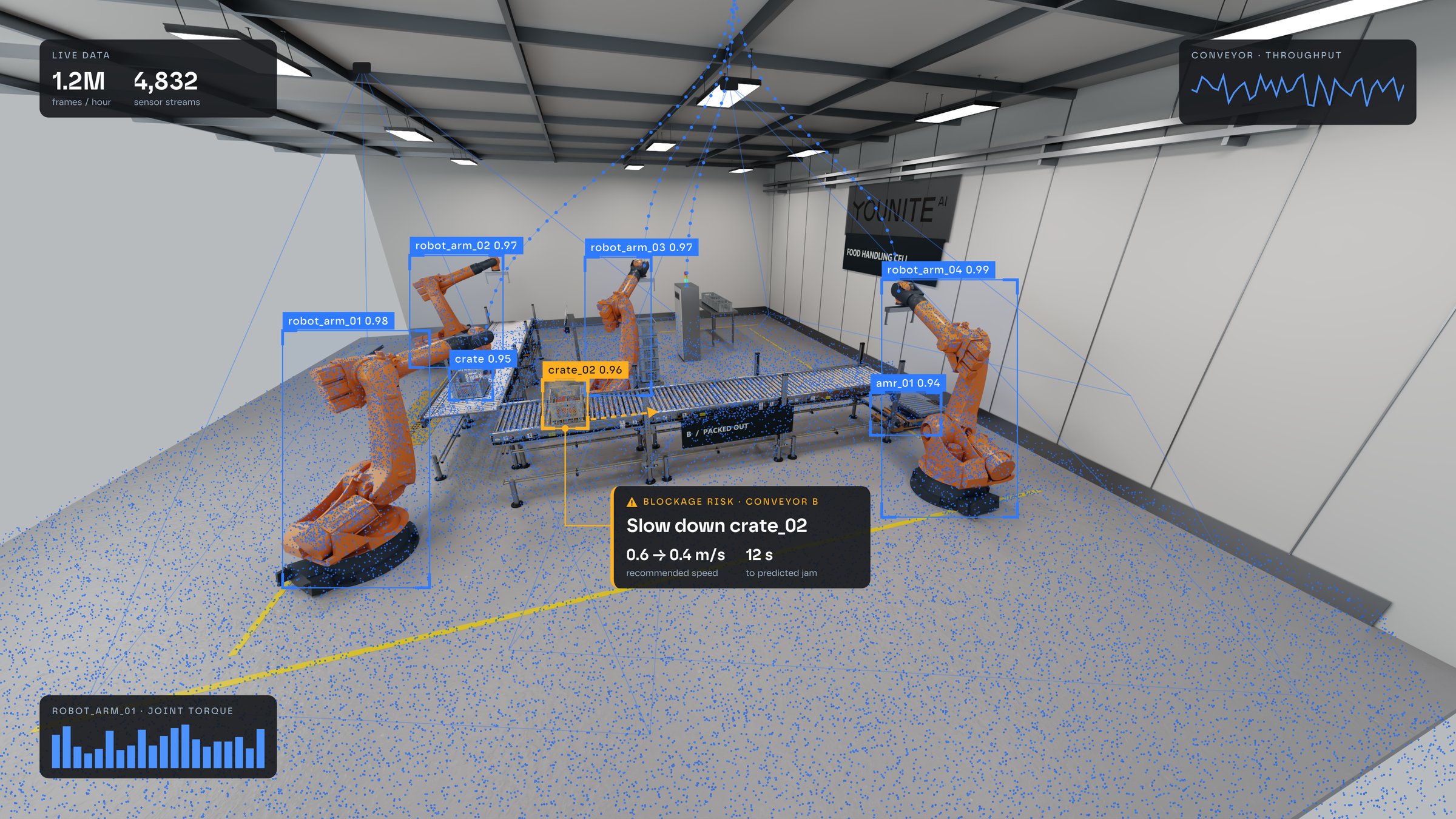
Unlike static 3D models, operational digital twins are continuously updated with information from their physical environments. By connecting spatial information, operational data and the changing state of real-world systems, they make it possible to understand physical environments in context and explore how they behave under different conditions.
Combined with simulation and AI, these environments can support the development, training and validation of Physical AI applications. Existing data gains context, alternative scenarios can be explored, and synthetic training data can complement what is available from the real world.
The challenge is to make this process scalable, reliable and less dependent on manual work.
See how Younite AI's real-to-sim platform, built on NVIDIA Omniverse, OpenUSD and NVIDIA Isaac Sim, turns real facilities into simulation-ready digital twins:
Physical AI Is Bigger Than Robotics
Robots are perhaps the most visible expression of Physical AI, but the benefits can begin long before a single robot is deployed.
Industrial operations, logistics, energy systems, infrastructure and entire cities are complex physical environments where AI could increasingly support prediction, optimization and autonomous decision-making. What these applications have in common is a need to understand the physical world: not just how it looks, but how it operates, changes and responds. That understanding can't come from AI models alone. It comes from connecting physical reality, operational data and simulation.
Making the Physical World AI-Ready
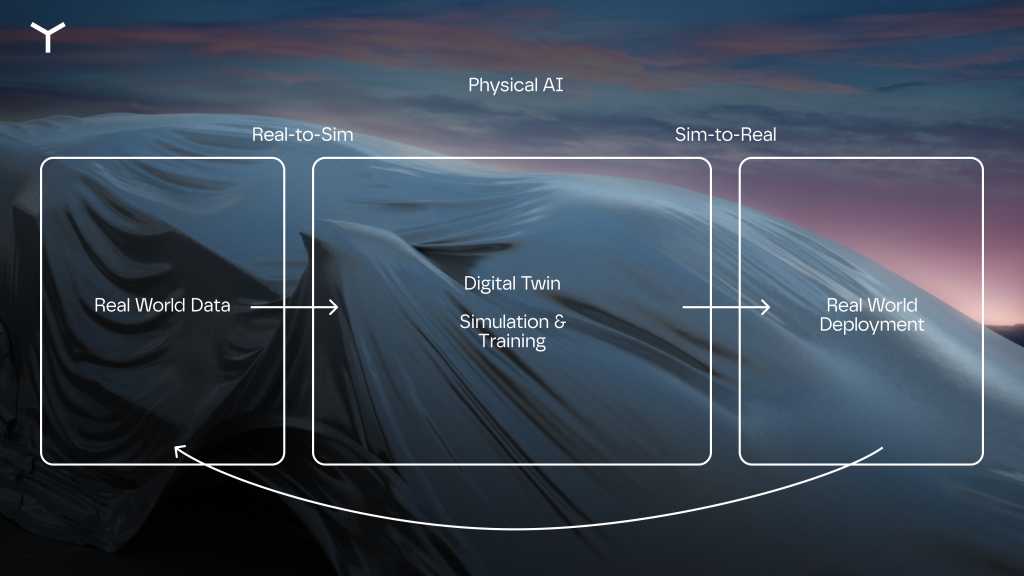
At Younite AI, we develop real-time operational digital twins that connect physical environments with operational data and simulation.
Our expertise in XR, artificial intelligence and software engineering helps us approach the data challenge from multiple perspectives, with the ambition of bridging the gap between the complexity of the real world and the data requirements of Physical AI.
There is still significant work to be done across the industry. Automating data preparation, generating realistic scenarios and validating simulation results against reality are difficult challenges, but solving them could unlock an entirely new generation of intelligent physical systems. The next breakthrough in Physical AI may not come from a more powerful model or a more sophisticated robot.
It may come from making the physical world itself ready for AI.
Speed to Market: How Can Younite AI Accelerate Physical AI Adoption?
For companies that want real results from Physical AI, such as using digital twins to improve operational efficiency, the question is not only what is possible. It is also how quickly that potential can be turned into something that works.
"If you want real operational benefits, choose a partner who has already applied Physical AI in practice. We have built digital twins with NVIDIA Omniverse and trained robots in Isaac Lab that are now running in a Nordic manufacturer's test environment. We also know how to integrate digital twins into existing systems and operations. That experience saves our customers months."
— Afa Heikkinen, CEO, Younite AI
Physical AI doesn't have to start from scratch. With the right partner, it can start from experience.
From Reality to Simulation, and back.