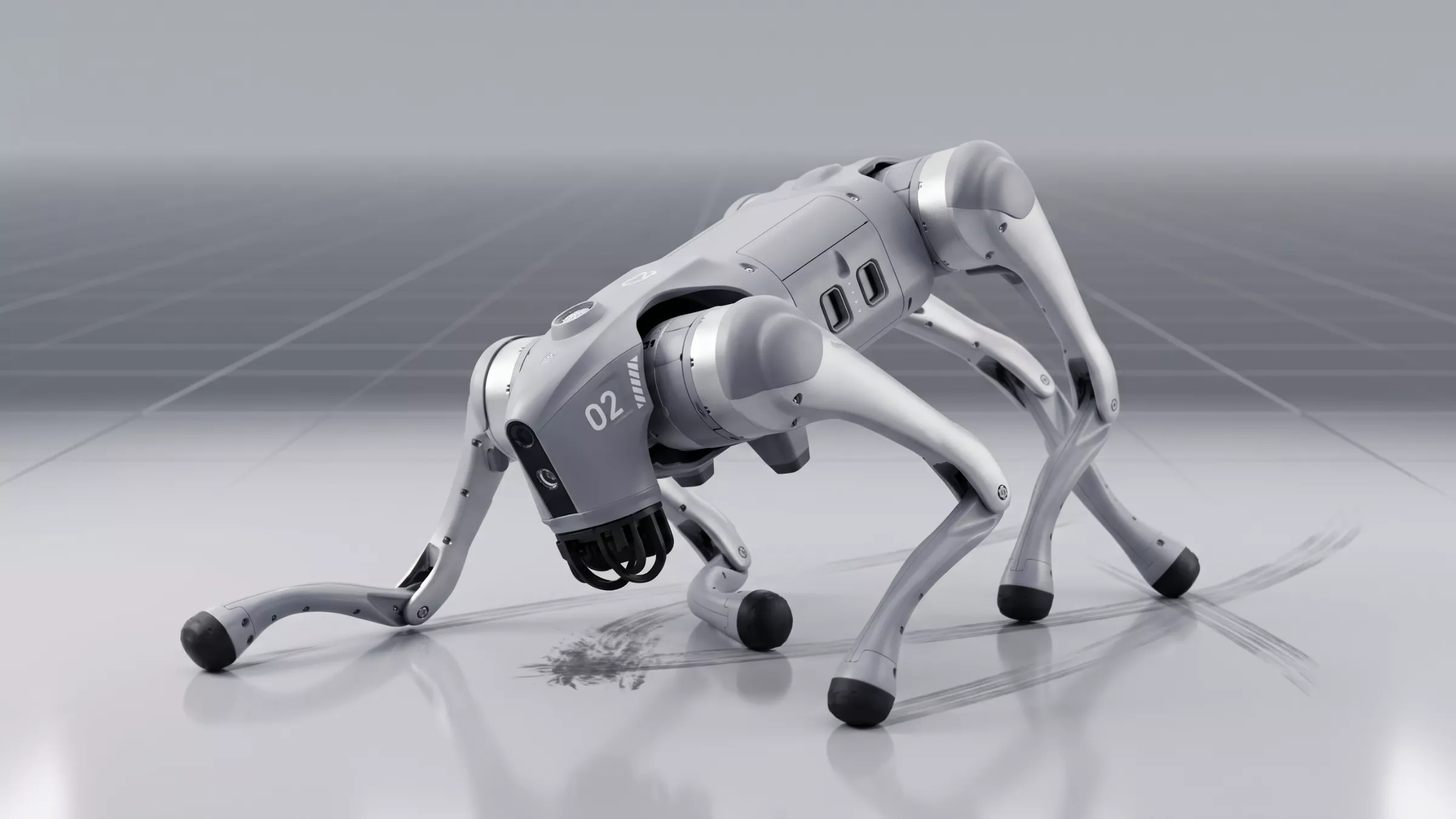
That was the CEO's reaction when he first saw Unitree Go2 robot dog moving through his facility. The robot was being trained in a virtual environment we had created for the client, and to be honest, its gait did look a little off.
It wasn't drunk. It had been trained on rough terrain: gravel, uneven ground, the kind of surface a four-legged robot needs to master outdoors. Now it was walking on a smooth and slippery office floor for the first time, recalibrating in real time. Working exactly as designed.
That reaction has stayed with me, because it captures something that gets lost in most digital twin conversations.
Not all virtual worlds are built the same
We tend to talk about digital twins and virtual worlds as if they're one thing. They're not. There's the kind built to look perfect — photorealistic, visually stunning, the kind that lets a customer configure their next yacht or see a product that doesn't physically exist yet. Extraordinary for sales, marketing, and early concept work. I love what these tools can do (and so do our clients).
And then there's the kind built to behave correctly. Accuracy plays a bigger role than visual fidelity. The friction coefficients are right, the physics are modelled precisely and edge cases are built in. These are the virtual worlds where AI actually learns. A thousand failed attempts here cost nothing. A thousand failed attempts on a real factory floor cost crazy sums of money.
We build both. But the value forms completely differently, and to succeed with Physical AI, meaning the training of your robot brains, you need to know the difference. Siemens has a good estimate of what's at stake: an AI-driven robot training process will take upwards of two weeks; without AI or the digital twin, humanoid training will extend much farther, if not be nearly impossible.
The wobble was the point
This is what the CEO didn't immediately realise: the wobble was exactly what you wanted to see. It was proof that the AI-driven robot dog was learning something real. The dog was navigating a surface it hadn't encountered before, adjusting on the fly.
A robot gliding smoothly across that office floor would have looked reassuring. It would also have meant the training wasn't honest. The virtual world it had learned in matched the real one too perfectly, which in practice means it didn't prepare the robot for anything it hadn't already seen. A flawless demo and a real-world failure are often the same product, just seen at different times.
The Unitree Co2 wasn't drunk. The wobble was proof it was learning something real, and today the doggy can handle an office floor without problems. A perfect demo would have been the lie, and a much more expensive one to discover later.
Younite AI builds digital twin foundations on the open OpenUSD standard, connecting sales, design, production, Physical AI robotics, and lifecycle services on a single model. If you'd like to talk about what a first step might look like for your organisation, get in touch.
About the author
Laura Olin
Leveraging her deep expertise in leadership and organizational strategies, Laura keeps Younite’s AI and digital transformation initiatives on track. Her role is multi-dimensional, focusing on aligning the company’s strategic goals and ensuring that operations run smoothly.