
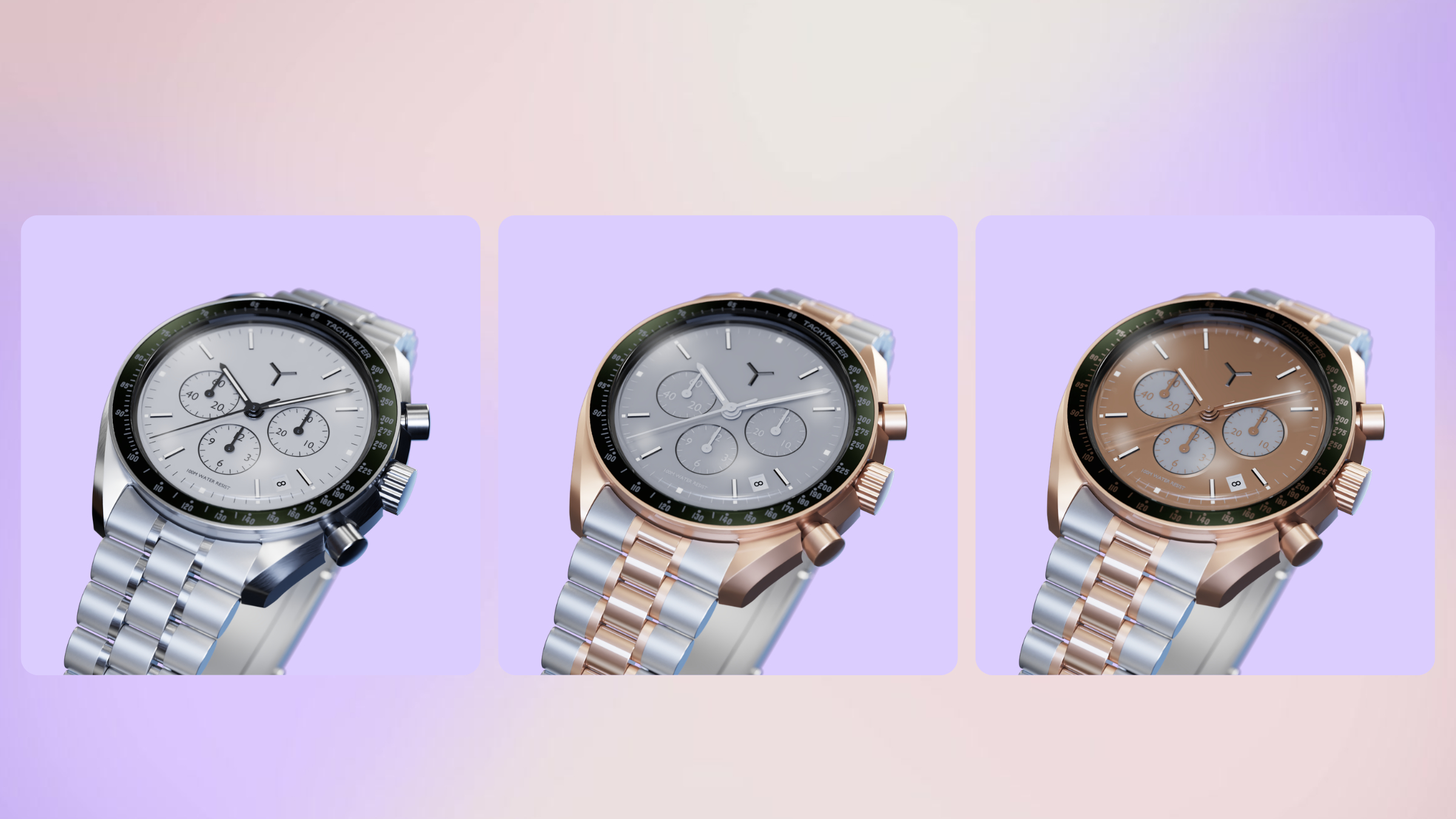
A digital twin can mean many things.
In operations, it can describe a data-driven model of a factory, machine or process. Digital twins can do a lot, like help simulate and test intelligent systems before they meet the physical world.
However, in this blog, we talk about digital twins in sales, marketing and product experience.
For configurable physical products, a customer-facing digital twin is a reusable digital version of the product. It helps teams show the product accurately in an interactive showroom, a configurator, campaign material, dealer conversations, and visual content.
This is way more than a product image.
A beautiful render is useful for one moment. A reusable digital product model is useful every time the product changes, every time a market needs another option, and every time a buyer wants to understand a version that is not physically in front of them.
Born with the product, useful beyond the launch
The strongest digital twins are not created as an afterthought for a campaign.
As Younite Product Owner Miikka Niemelä puts it: “The digital twin is the product foundation. It should be born when the product is born, in the designer’s computer or engineering workshop, and then follow the product through launch, sales, service, ownership, and later updates.”
That continuity matters because many complex products are sold in situations where the exact physical version is not available. A buyer wants to compare layouts or materials that are not on the showroom floor. A dealer needs to explain a new model before it has arrived, or a launch team needs to create belief before the product is widely available.
A sales and marketing digital twin helps by giving teams one reliable product foundation to work from. The same product can appear in different experiences and outputs, with the right geometry, materials, options, and configuration rules behind it.
The goal is not to replace the physical product. The goal is to help people understand it earlier, more accurately and with more confidence.
Saxdor Yachts: a concrete example
Saxdor shows why this matters.
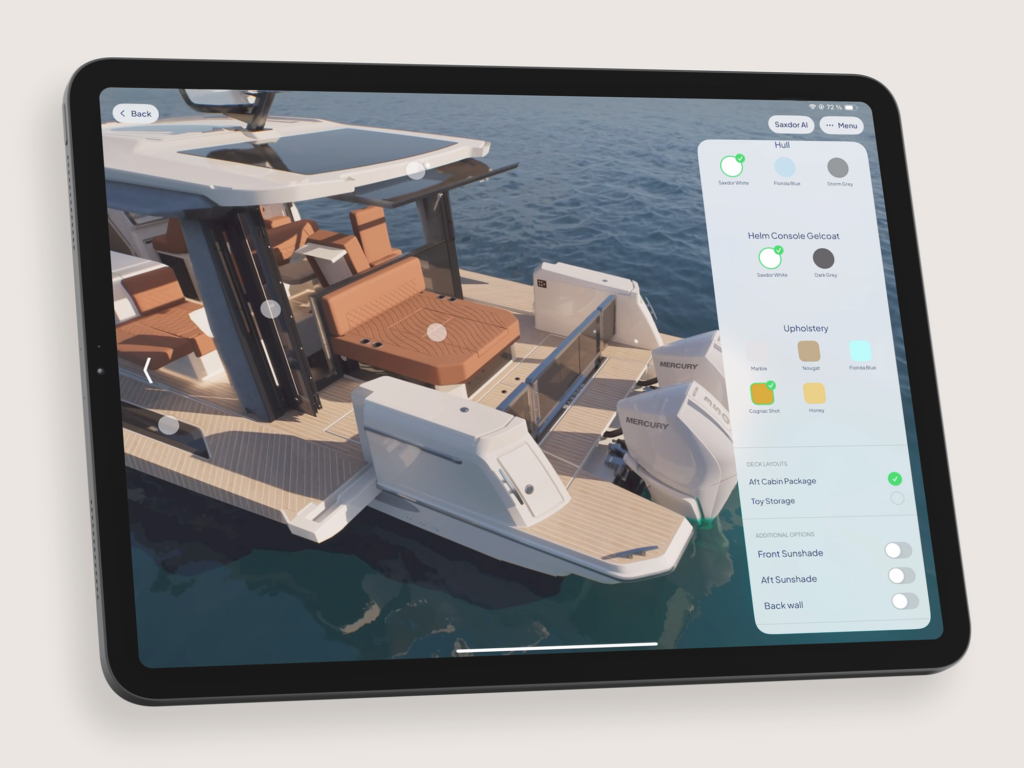
A yacht is not an impulse purchase. Buyers need to understand space, proportions, materials, feeling, and use. They want to imagine how the product works in real life.
Ludvig Liljequist, Digital Development Director from Saxdor Yachts described the scale of that challenge in Younite’s recent webinar:
“Saxdor has 150 dealer locations across five continents.” For a yacht manufacturer, that means the exact model, layout, and option combination cannot be physically present in every sales conversation.
Saxdor utilized Younite Virtual Showroom for the world’s first virtual yacht launch at Cannes 2025. In that context, the digital twin helped the product travel before every physical version could. Dealers could show and explain the yacht more clearly. Buyers could explore the product before the exact model was nearby. The launch created a stronger product experience and sales without depending on physical availability.
That is the practical value. The digital twin makes the product easier to understand and buy before it is possible to touch.
Cost-savings with digital twins
A useful sales and marketing digital twin needs accurate geometry and materials. It needs clear configuration rules, so impossible combinations do not become buyer-facing promises. It needs lighting standards, naming conventions, approval flows, version control, and ownership, so the model stays reliable when the real product changes.
Ownership is important. When the usable product model sits outside the company, scattered across agencies, campaign files, and local adaptations, every new need becomes slower and more expensive. The company may still have impressive visuals, but it does not fully control the product knowledge behind them.
Younite has seen this in the automotive industry. In one implementation, the goal was to bring ownership and control of the digital twin back from external agencies. The estimated savings were approximately 15 million euros per year per car model, including only the direct savings from the solution. More value is created when the same digital foundation supports user manuals, service point training, sales and marketing campaigns, and customer lifecycle communication.
That is why digital twin work should not be treated as a one-time visual project. When the digital twin belongs to the product life cycle, it keeps serving the business long after the first launch images are finished.
The real question for digital twin in sales
Not every product needs this level of digital twin work. If the product is simple, static, and easy to photograph, traditional visual production may be enough.
But configurable products ask more from the sales process. Buyers need confidence before the product is in the room. Dealers need something accurate to show. Marketing and sales needs visuals that stay current as the product changes.
So the real question is not whether the next image can look better. It is whether the business can keep showing the product accurately as options, markets, service needs, and ownership moments change.
For the buyer, the visual makes the product understandable.
For the business, the digital twin keeps that understanding reliable.
Do you want to see digital twins in action? Check out Younite Virtual Showroom and Younite Virtual Studio.
